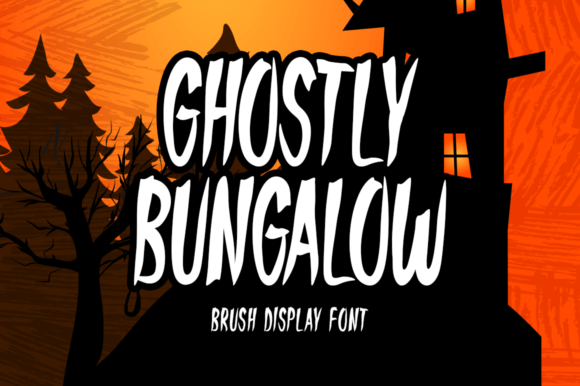
Ghostly Bungalow Font Review
Opening a blank brand board, I often look for a font that can instantly elevate the visual language of a project. Ghostly Bungalow, a recently released display font that gives your works a unique flair, was one of those finds. It arrived with a quiet confidence, promising to bring a touch of mystery and sophistication to any design.
Ghostly Bungalow for Logo Design and Brand Identity
Ghostly Bungalow for logo design and brand identity offers a distinct character that feels both modern and nostalgic. Its subtle irregularities and soft curves give it an organic feel, making it ideal for brands that want to stand out without being too bold. I tested it on a boutique skincare line, where its elegance complemented the clean, minimalist aesthetic of the product packaging.
The font’s personality is warm and approachable, yet it maintains a level of refinement that works well for luxury or artisanal brands. When paired with a serif font like Playfair Display, it creates a balanced contrast that enhances readability while keeping the visual interest high.
Ghostly Bungalow for Packaging Design and Product Labels
When placed on a product label or packaging mockup, Ghostly Bungalow adds a sense of whimsy without overwhelming the design. It worked particularly well on a handmade soap label, where its flowing strokes echoed the natural ingredients listed on the back. The font’s weight and spacing made it readable at small sizes, which is a crucial factor for product labels.
However, I noticed that in some cases, the font’s decorative elements could become distracting if not used sparingly. For example, on a business card with limited space, it might be better to stick with a more straightforward version of the font to maintain clarity.
Ghostly Bungalow for Web Design and Social Media Graphics
Ghostly Bungalow for web design and social media graphics brings a fresh, creative energy to digital assets. On a website header, it added a sense of personality that felt just right for a creative studio or independent designer. It also performed well on Instagram posts, where its visual appeal caught the eye without clashing with other design elements.
For web use, the font’s webfont availability is a big plus. It allows for consistent branding across different platforms without the need for image files. That said, I recommend using it as a headline font rather than body text, as its intricate details may reduce legibility on screens.
Ghostly Bungalow for Business Cards and Print Materials
On a business card, Ghostly Bungalow struck the perfect balance between style and functionality. Its slightly uneven baseline gave it a handcrafted feel, which aligned well with a local bakery’s branding. The font’s weight and spacing made it easy to read even at smaller sizes, ensuring that contact information remained clear.
For print materials like posters or flyers, Ghostly Bungalow shines when used as a focal point. It works best when paired with simpler, more neutral typefaces to avoid visual clutter. In a recent editorial design project, it served as the main headline, drawing attention without overpowering the surrounding content.
Ghostly Bungalow for Creative Projects and Branding Systems
Ghostly Bungalow for creative projects and branding systems proves to be a versatile tool for designers looking to add a unique touch to their work. It’s especially effective when used as an accent font or in short phrases, such as taglines or headings. Its ability to convey both warmth and sophistication makes it a strong choice for brands aiming to build a memorable identity.
One thing to keep in mind is that Ghostly Bungalow may not be the best fit for formal or corporate branding. Its decorative nature and irregular shapes are better suited for creative, lifestyle, or artisanal brands. If you’re working on a more traditional project, it might be worth exploring a different font that aligns more closely with the desired tone.
Before finalizing any design, I always recommend testing Ghostly Bungalow in various contexts—on different backgrounds, sizes, and formats. This helps ensure that it performs well across all applications and maintains its intended visual impact.